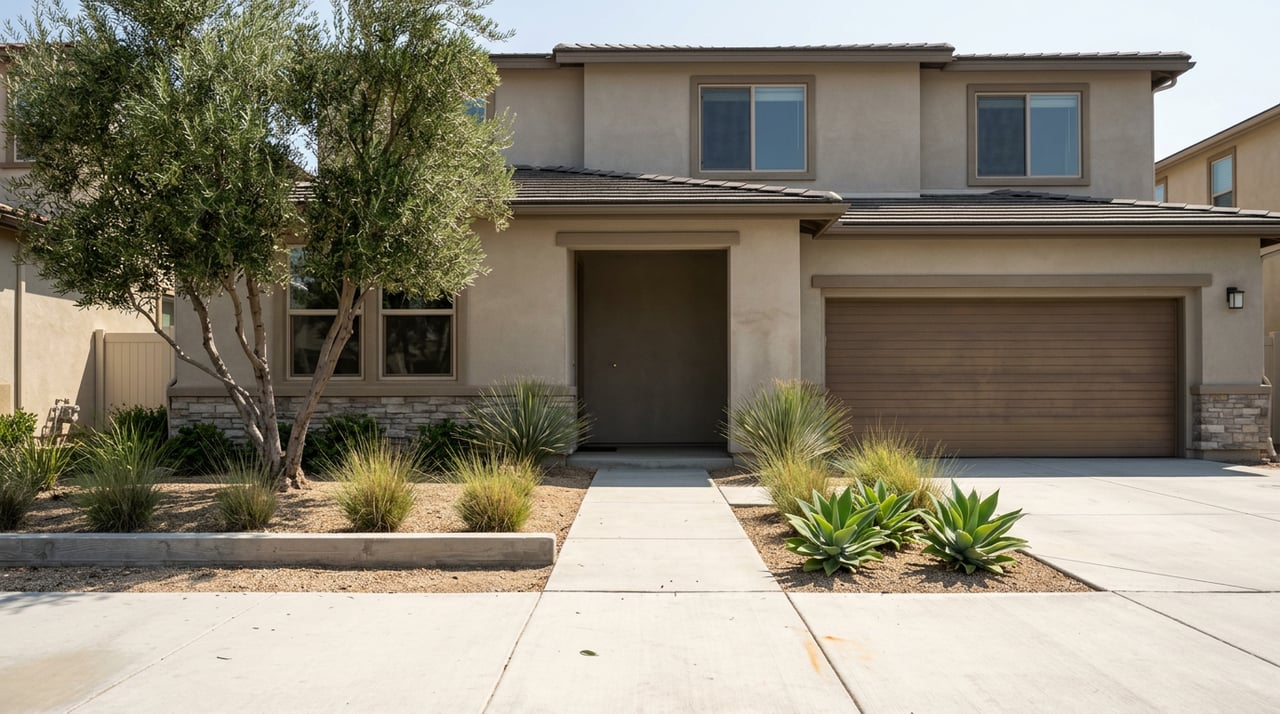
A buyer shopping new construction in Summerlin West signs a purchase agreement, locks a rate, and budgets around the builder's quoted monthly payment. Six months later, the first full Clark County property tax bill arrives with a line item nobody walked them through. It isn't the HOA. It isn't a supplemental tax adjustment. It's a Special Improvement District assessment, and in one recent Summerlin closing it added $1,847 to the year. That number is scheduled to repeat every November for the next 18 years.
This is the part of Summerlin's pricing that a median-price search never shows. Two homes can list at nearly the same number and carry very different total costs, because the real comparison isn't the price on the sign. It's the stack of obligations sitting underneath it, and that stack changes dramatically depending on which decade of Summerlin's build-out a given parcel belongs to.
The Line Item That Shows Up After Closing
A Special Improvement District, or SID, is how Nevada municipalities finance the infrastructure that turns raw land into a livable street grid: roads, curbs, sewer mains, storm drainage, streetlights, and in some districts, the trails and public landscaping that make a new Summerlin village feel finished on move-in day. The city or county issues a bond to build that infrastructure, then every parcel that benefits pays a fixed annual assessment until the bond retires, typically over 15 to 30 years.
The assessment is a lien on the parcel, not a debt tied to the person who bought the home. That means it transfers to the next owner at resale. A homeowner who prepays and retires the balance early can do that, but absent a payoff, the buyer of a resale home in a newer village inherits whatever year of the amortization schedule the seller was on.
A Special Improvement District is a mortgage on infrastructure, not on the house. Whoever buys the home inherits whichever year of that mortgage the previous owner left behind.
Summerlin's own developer materials confirm the mechanics: Howard Hughes' published FAQ on Summerlin's Special Improvement Districts lays out that these assessments fund public improvements through municipal bond proceeds and remain attached to the parcel through resale. What it can't tell a shopper browsing listings is which specific address still owes a balance and which one has already paid it off, because that depends entirely on when the district was formed.
Why the Newest Villages Carry the Heaviest Assessments
Summerlin spans more than three decades of construction, and that age gap is exactly why its SID exposure isn't uniform. The villages currently in active build-out on the western edge, including Kestrel, Redpoint, and Stonebridge, sit on the newest bonds in the community. Of those, Redpoint and Stonebridge are the two villages specifically flagged as carrying the largest current assessments, since their districts are earliest in the amortization cycle. Meanwhile, homes in the community's original eastern sections have had two to three decades for those same bonds to wind down, and older properties in general are far more likely to carry a small remaining balance or none at all.
That timing difference shows up directly in resale pricing. As of the first quarter of 2026, eastern Summerlin around zip code 89145, built out mostly in the 1990s and early 2000s, was trading roughly $480,000 to $580,000 for standard production homes. Central, more established Summerlin near 89135 ran $580,000 to $750,000. The newer western villages, including Redpoint and The Cliffs, started around $700,000 and climbed past $900,000 for larger new-construction product. Guard-gated premium enclaves like The Ridges and Queensridge sat above $1 million.
A buyer comparing a $650,000 home in an established eastern village against a $650,000 new-construction home in Redpoint isn't actually comparing two similar purchases. One likely carries a negligible or retired SID obligation. The other may carry a five-figure remaining balance that adds a real annual cost for well over a decade.
| Summerlin area | Typical vintage | 2026 resale price band | SID exposure |
|---|---|---|---|
| Eastern Summerlin (89145) | 1990s–early 2000s | ~$480,000–$580,000 | Mostly amortized or retired |
| Central Summerlin (89135) | Established | ~$580,000–$750,000 | Partial balances vary by parcel |
| Western villages (Redpoint, The Cliffs) | Active build-out | ~$700,000–$900,000+ | New districts; Redpoint and Stonebridge carry the largest current balances |
| Guard-gated premium (The Ridges, Queensridge) | Mixed | $1,000,000+ | Varies by district and phase |
Three HOA Bills, One Listing Sheet
The SID isn't the only layer that a single listed HOA figure tends to hide. Most Summerlin homes sit inside three separate associations at once: a village or sub-community association, the community-wide Summerlin Council, and one of three master associations depending on location, Summerlin North, South, or West. For 2026, published Council budget materials put the master assessments at $74 a month for North, $76 for South, and $69 for West, plus a $37 monthly Council allocation on top of that. A listing that shows a single HOA number is very often showing only one of these three lines.
That matters most at resale, when a seller has to order a resale package for every association involved, not just one. Nevada law requires the seller to furnish that package, including the operating budget and any outstanding assessments, before a sale can close under NRS 116.4109. Skipping this step, or assuming one HOA fee covers everything, is one of the more common places a Summerlin transaction slows down near the finish line.
New Construction's Advertised Price Isn't the Real Price Either
The SID and HOA math above assumes a buyer is comparing apples to apples on the sale price itself, but that's rarely true when new construction is part of the comparison. Builders in Summerlin's active western villages have been pricing new product 10 to 15 percent higher per square foot than comparable resale homes, then offsetting a meaningful share of that gap with incentive packages that shift by the quarter. This year those packages have included rate buydowns near 5.99 percent, closing-cost credits, and design-center allowances that together can be worth well into five figures per home. Taylor Morrison, for instance, has run tiered financing in Redpoint with a rate as low as 2.99 percent in the buyer's first year.
Builder activity hasn't slowed either. KB Home opened its Enclaves and Reserves collection at Cloudbreak Ridge in the La Madre Peaks Village on May 22, 2026, with pricing starting in the low $800,000s, adding yet another new-construction option competing directly against resale inventory in the same price band. A buyer who only compares sticker prices between a new build and a resale home is missing both the incentive value baked into the new-construction number and the SID obligation that often comes with it.
Five Numbers to Pull Before Comparing Two Summerlin Listings
- The current SID or LID balance for the specific parcel, available through the Clark County Treasurer's parcel lookup using the property's APN
- Whether the balance is prepaid, active, or already retired, since two homes on the same street can differ
- The full HOA stack for that address: village dues, Council allocation, and the applicable North, South, or West master assessment
- The builder's current incentive structure if comparing against new construction, since rate buydowns and credits change the effective price more than the base price does
- The price per square foot after incentives, not before, when weighing new construction against a comparable resale home
What the Headline Number Actually Blends Together
As of June 2026, Summerlin's valley-wide median sold price eased to $537,500, with homes averaging 35 days on market across roughly 1,465 active listings and $327 per square foot. That figure is accurate, and it's also a blend of every vintage discussed above: 1990s eastern resale with retired SID balances, established central inventory, and brand-new western construction still carrying its full assessment. Reading that single median as a stand-in for what Summerlin costs erases the exact distinction that determines a buyer's real monthly number.
The useful question isn't what Summerlin costs on average. It's what a specific parcel costs once every layer, the sale price, the SID balance, the triple HOA stack, and the true post-incentive price per square foot, is added together. That total is the number worth comparing, and it rarely matches the one on the sign.
If you're weighing a specific Summerlin village against another, or trying to model what a listing actually costs once every assessment is accounted for, Rain & Co Realty can pull the parcel-level detail before you write an offer. Get a Free Home Valuation to start with a clear number, not just a median.
Frequently Asked Questions
Does paying off a home's SID balance also eliminate HOA fees? No. A Special Improvement District assessment and homeowners association dues are separate obligations. Paying off one has no effect on the other, and both can appear on the same property at once.
Is the SID or LID assessment included in the regular property tax bill? Not always. These assessments may be billed or administered separately from the standard Clark County property tax bill, so reviewing the tax amount alone can miss an active special assessment entirely.
Do all Summerlin homes carry a SID balance? No. Exposure varies by parcel and by the district the home was built under. Some homes have an active balance, some have a fully retired one, and some were never part of a district that still carries debt. The only reliable way to know is a parcel-specific lookup, not an assumption based on the home's age or village.